


September 18, 2026
Sensory Room Ideas: Equipment, Layout and Costs in the UK
What belongs in a sensory room, how to lay it out for children and adults, and what it realistically costs in the UK.
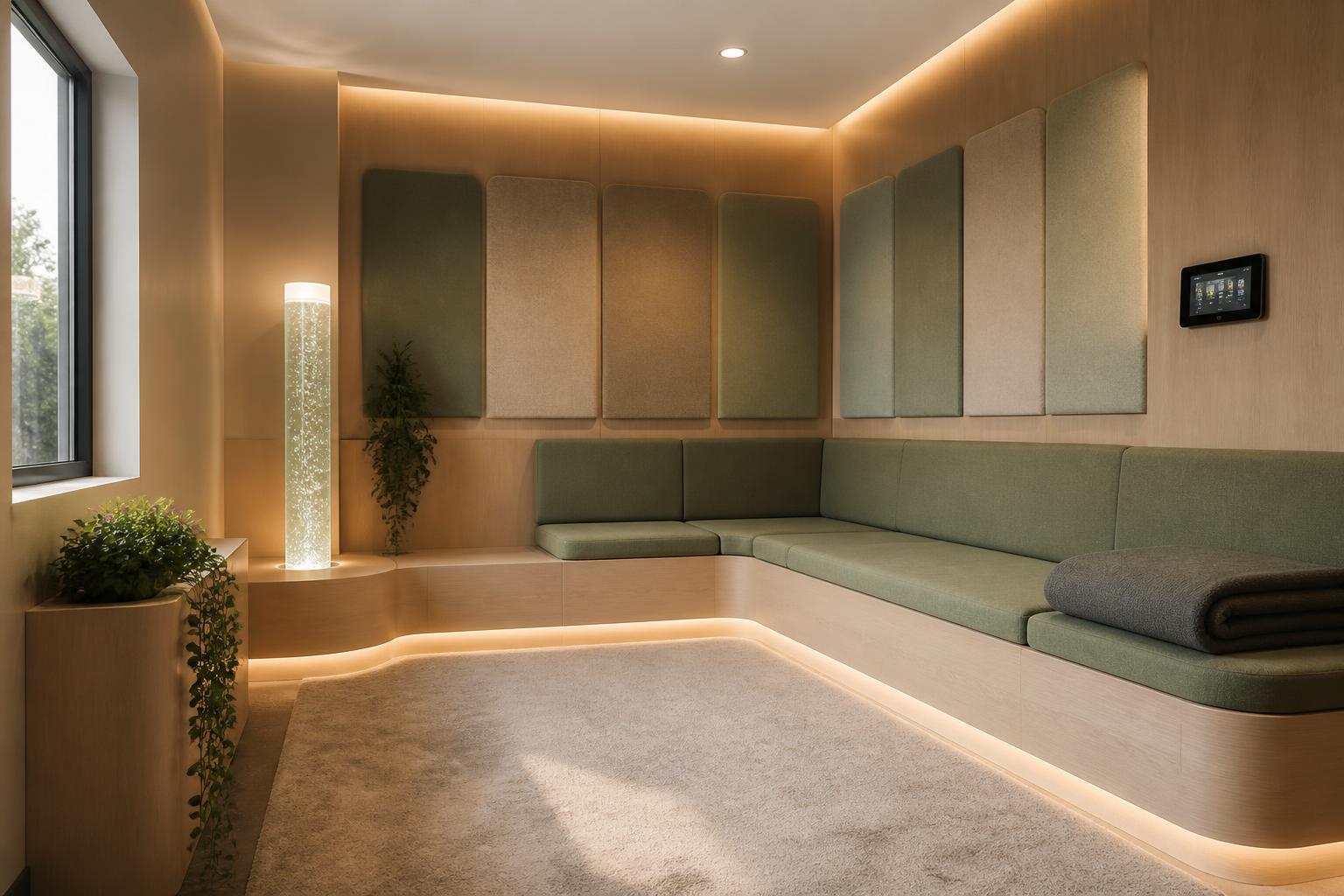
A sensory room is a space designed so that the nervous system can stop bracing. Everything inside it has one job: to give the body predictable, adjustable input so a person can either settle down or wake up, and then return to the rest of their day.
That is the whole principle. Once you hold on to it, choosing equipment becomes far simpler, because you stop buying interesting objects and start building a room that does a job.
This guide covers what a sensory room is, the equipment worth the money, layouts that work for children and adults, and realistic UK costs.
What is a sensory room?
A sensory room is a dedicated space with controllable light, sound, texture and movement, used to help someone regulate their sensory and emotional state. It supports autistic and ADHD people, children and adults with SEND, people living with dementia, and anyone who becomes overloaded in busy environments.
Two broad purposes exist, and good rooms can do both:
- Calming (low arousal): dim warm light, soft textures, quiet, minimal visual clutter. Used for overwhelm, meltdown recovery, anxiety and sleep preparation.
- Alerting (active): bubble tubes, colour change, movement, resistance and music. Used for low arousal, shutdown, disengagement and motivation.
A room that is permanently set to "exciting" is not a sensory room. Adjustability is the feature.
Sensory room ideas that actually work
1. Control the light first
Light is the cheapest and most powerful change you can make. Remove overhead fluorescent glare, add dimmable warm lamps or LED strips at low level, and give one person control of the brightness. Colour-changing light is useful, but dimming matters more.
2. Treat the sound before you add sound
Acoustic panels, heavy curtains, rugs and soft seating reduce echo, and echo is what makes a room feel relentless. Only once the room is quiet does adding calming audio, water sounds or music have any effect.
3. Give deep pressure a permanent home
Weighted blankets, a crash mat, beanbags, a body sock or a tight corner between two cushions all provide proprioceptive input, which is the most reliably calming input for most people. Keep it available rather than requested.
4. One visual focal point, not five
A bubble tube, projector, fibre-optic strand or slow-moving projection gives the eyes somewhere to rest. Several competing displays cancel each other out and raise arousal instead of lowering it.
5. Offer movement
A rocking chair, swing, therapy ball or simply room to pace supports vestibular regulation. Movement often needs to come before stillness, not instead of it.
6. Include tactile choice
A small basket of textures, such as a smooth pebble, fabric squares, fidgets and putty, lets someone self-select. Choice is part of the regulation, not an extra.
7. Design a clear exit
A sensory room must be easy to leave. A visible door, a clock and an agreed signal prevent the room being experienced as containment. This matters enormously in schools.
8. Plan for adults too
Adults use sensory spaces for nervous-system regulation, decompression between meetings, and recovery after sensory-heavy days. A curtain or screen that hides the more childlike equipment turns one room into a space that works for an eight-year-old and a forty-year-old.
Sensory room equipment checklist
| Priority | Item | Why it earns its place |
|---|---|---|
| Essential | Dimmable warm lighting | Removes glare, gives instant control |
| Essential | Soft floor and seating | Comfort, safety, acoustic damping |
| Essential | Weighted blanket or crash mat | Deep pressure, most reliable calming input |
| Essential | Acoustic treatment | Reduces echo and background load |
| High value | Bubble tube or fibre optics | Single calm visual focus |
| High value | Movement option | Vestibular input before stillness |
| High value | Tactile basket | Self-selected sensory choice |
| Useful | Projector or screen | Immersive calm scenes, adjustable |
| Useful | Audio with volume control | Water, nature or music, user led |
| Optional | Interactive panels | Engagement and cause-and-effect play |
How much does a sensory room cost in the UK?
Costs vary with the space you already have and how much you build in.
- Corner of an existing room: £300 to £1,500. Lighting, soft seating, weighted blanket, tactile items.
- Converted small room: £2,000 to £8,000. Acoustic treatment, fitted lighting, bubble tube, projector, safe flooring.
- Fully specified sensory room: £10,000 upwards. Integrated control, interactive equipment, professional installation and staff training.
- A self-contained sensory pod: a pre-built alternative when no room is free, or when a space needs to be movable, soundproofed and consistent. Our Peace PODs exist for exactly that situation.
Two cost warnings worth having early. First, equipment without staff training is usually the most expensive mistake, because the room ends up unused or used as a reward and a punishment. Second, the most-used items are almost always the cheapest ones.
Sensory room ideas for autism and ADHD
For autistic people, predictability is often the active ingredient: same room, same layout, same routine on entry, no surprises. For ADHD, the room frequently needs to permit movement and intensity first, then bring the level down.
Both benefit from the same rule: the person using the room chooses the settings. A sensory room designed entirely by adults for a child, without that child's input, tends to have expensive equipment nobody touches.
Where to go next
If you are designing a space for a family, a school or a workplace, we can walk through the room with you, look at what you already have, and be honest about whether you need equipment, training, a room or a pod.
Book a free discovery call, see the Peace POD range, or read our guide to sensory pods and sensory rooms and their benefits at every age.
Sensory room questions, answered
- What is a sensory room?
- A sensory room is a dedicated space with controllable light, sound, texture and movement that helps a person regulate their sensory and emotional state. It can be set up to calm an overloaded nervous system or to gently raise alertness when someone has shut down.
- What equipment do you need in a sensory room?
- Start with dimmable warm lighting, soft seating and flooring, acoustic treatment and a source of deep pressure such as a weighted blanket or crash mat. Then add one visual focal point such as a bubble tube, a movement option, and a small basket of tactile items. Adjustability matters more than quantity.
- How much does a sensory room cost in the UK?
- A sensory corner in an existing room typically costs £300 to £1,500. A converted small room usually costs £2,000 to £8,000. A fully specified sensory room with integrated control and professional installation starts around £10,000. A self-contained sensory pod is an alternative where no room is available.
- What is the difference between a sensory room and a sensory pod?
- A sensory room is built into an existing space. A sensory pod is a self-contained structure that already includes lighting, sound insulation, seating and controls, so it can be placed in a hall, classroom, office or garden without building work.
- How do you make a sensory room calming rather than exciting?
- Lower the light, treat the echo, reduce the number of visual displays to one, add deep pressure and soft texture, and give the person using the room control of the settings. Bright colour change and multiple displays raise arousal, which is useful for alerting but not for calming.
- Can adults use a sensory room?
- Yes. Adults use sensory rooms for nervous-system regulation, decompression during a working day and recovery after sensory-heavy environments. A curtain or screen that conceals more childlike equipment lets one room serve both children and adults.
Tags
Newsletter
Get new notes in your inbox.
Short, practical writing on brain training, coaching, and calmer work. No spam. Unsubscribe any time.
By subscribing you agree to our Privacy Policy.