


September 18, 2026
Calming Rooms and SEND Rooms in Schools
Purpose, layout, staffing, safeguarding, costs and funding for a school calming room, SEN room or SEND room that is genuinely used well.
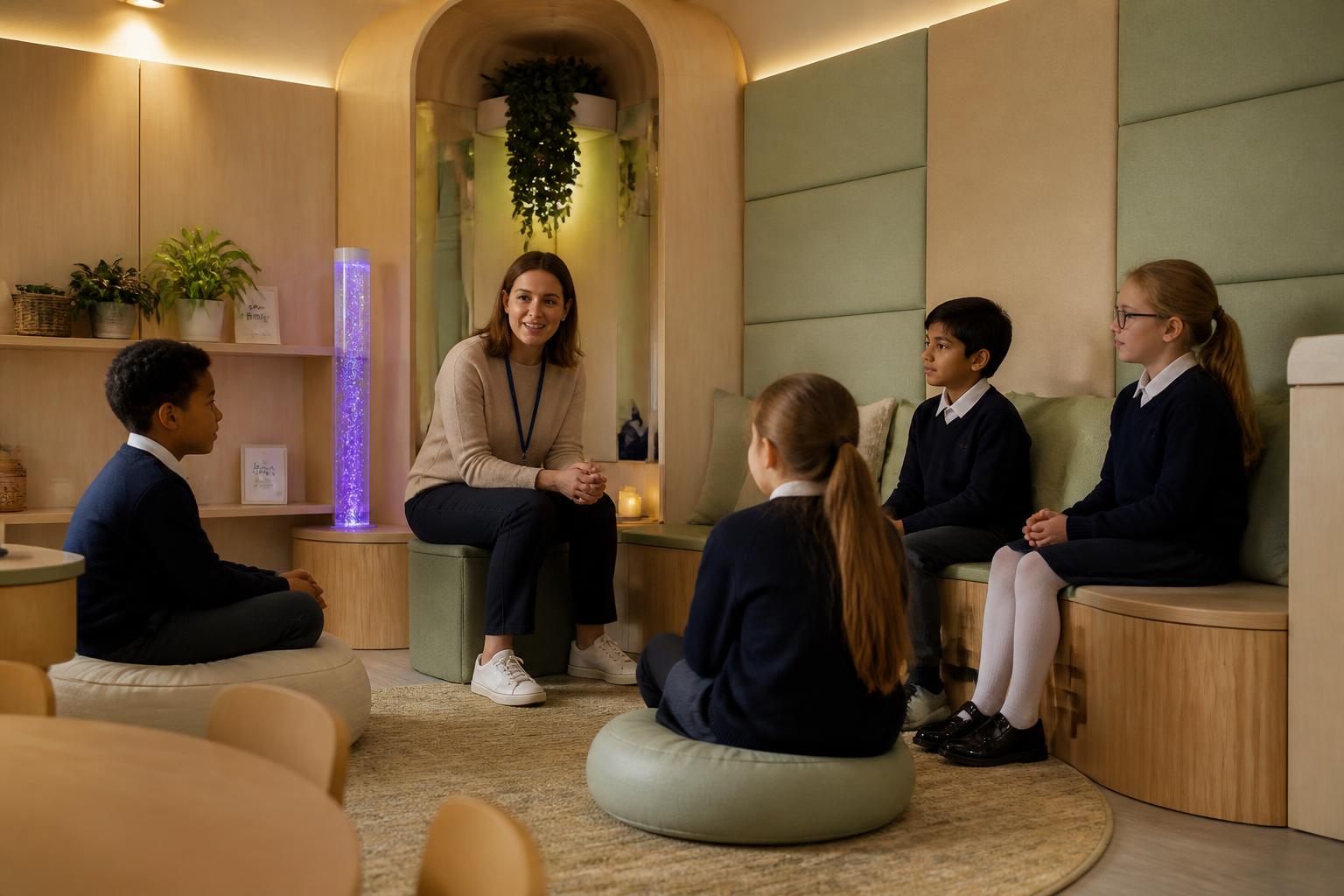
A calming room in a school is a small, low-stimulus space where a pupil can regulate, with an adult, and then return to learning. It is not a sanction space, a seclusion room or a store cupboard with a beanbag in it. When a calming room works, attendance and lesson time improve. When it is set up without a plan, it quietly becomes the place difficult children are sent.
This guide is written for headteachers, SENDCos, pastoral leads and business managers who are being asked for a calming room, SEN room, SEND room or sensory room and want to do it properly the first time.
Calming room, sensory room, SEN room: what is the difference?
The terms are used loosely, so it helps to agree language before you spend anything.
- Calming room: low-arousal space for regulation and recovery. Dim, quiet, soft, uncluttered.
- Sensory room: wider purpose, with adjustable equipment for both calming and alerting.
- SEN or SEND room: an umbrella term for a room supporting pupils with special educational needs, which may combine calming, sensory, teaching and intervention use.
- Nurture or safe space: usually relational and staffed, often with a calming corner within it.
Most primary and secondary schools need one flexible room used well, not four specialist rooms used rarely.
What a calming room in school needs
1. A written purpose. One paragraph agreed by the senior leadership team: who it is for, what it is used for, and what it is never used for. Everything else follows from this.
2. Low arousal as the default. No overhead glare, no wall of displays, no echo. Warm dimmable lighting, soft flooring, a small number of soft seats, and calm neutral colours. Schools consistently overspend on equipment and underspend on acoustics.
3. Deep pressure and texture. Weighted blanket, cushions, a corner to fold into, a small basket of tactile items. These get used more than anything with a plug.
4. One visual focal point. A bubble tube, projection or slow light change. Additional displays raise arousal.
5. A clear, visible exit and line of sight. Safeguarding depends on it. A calming room must never be lockable from the outside, and staff must be able to see and be seen.
6. A named route in and out. Who can send a pupil, who stays with them, how long, what happens on return, and where it is recorded. Without this, use drifts.
7. Staff training. Regulation is co-regulation: a calm adult is the most effective item in the room. Training on nervous-system basics, sensory profiles and de-escalation is what turns equipment into outcomes. This is exactly what our CPD-accredited school training covers.
Safeguarding and the line you must not cross
A calming room is a supported space a pupil chooses to use. Seclusion is confining a pupil alone against their will. The two must never blur.
Practical safeguards: door opens from inside, staff presence or direct line of sight, a visible clock, an agreed exit signal, time limits, logging of every use, and a review of that log each half term. If your log shows the same handful of pupils sent repeatedly by the same staff, the room is being used as a behaviour tool and the plan needs rewriting rather than the room re-equipping.
What it costs, and how schools fund it
- Calming corner within an existing classroom: £300 to £1,500.
- Converted small room or office: £2,000 to £8,000 including acoustic treatment, lighting and safe flooring.
- Fully specified sensory room: £10,000 and upwards.
- A self-contained school pod: used where no room is spare, where a space needs to be movable, or where sound insulation in a busy corridor is the real problem. Our Peace PODs are designed for this and arrive complete.
Common UK funding routes include the school's SEN notional budget, high needs top-up funding for named pupils, pupil premium where the rationale is documented, capital or devolved formula capital for building works, trust-wide capital bids in a multi-academy trust, parent-teacher fundraising, and local charitable or community grants. Naming the pupil outcomes you expect makes every one of these bids stronger.
How to prove it worked
Choose two or three measures before you build, and record a baseline. Useful ones: lesson minutes retained, number of full classroom exits, incidents recorded, attendance for named pupils, fixed-term suspensions, and pupil self-report on a simple three-point scale before and after use.
Review at the end of each term. A calming room with a clear purpose, a staffed route and half-termly log review is the version that keeps children in lessons.
Where to start
If you are being asked for a calming room and are not sure whether you need equipment, training, a converted room or a pod, we will walk through it with you honestly, including when the answer is "train the team first".
Book a free discovery call, explore school training and CPD, see the Peace POD range, or read our guide to sensory room ideas, equipment and costs.
Calming room questions from schools
- What is a calming room in a school?
- A calming room is a small, low-stimulus space where a pupil can regulate with adult support and then return to learning. It uses dim warm lighting, soft seating, acoustic treatment and deep-pressure items, and it is used for regulation rather than as a sanction.
- What is the difference between a calming room and a sensory room?
- A calming room is deliberately low arousal and used for recovery and regulation. A sensory room has a wider purpose and adjustable equipment that can either calm or raise alertness. Many schools need one flexible room that can do both, set low by default.
- Is a calming room the same as seclusion?
- No. A calming room is a supported space a pupil chooses to use, with a door that opens from the inside, staff presence or line of sight and a time limit. Seclusion means confining a pupil alone against their will and must never be confused with a calming space.
- How much does a school calming room cost in the UK?
- A calming corner in an existing classroom typically costs £300 to £1,500. A converted small room usually costs £2,000 to £8,000 including acoustic treatment, lighting and safe flooring. A fully specified sensory room starts around £10,000, and a self-contained school pod is an alternative where no room is available.
- How can a school fund a SEND or sensory room?
- Common routes are the SEN notional budget, high needs top-up funding for named pupils, pupil premium where the rationale is documented, devolved formula capital for building works, trust-wide capital bids, parent-teacher fundraising, and local charitable grants. Naming the expected pupil outcomes strengthens every bid.
- How do you measure whether a calming room is working?
- Record a baseline and track two or three measures: lesson minutes retained, full classroom exits, recorded incidents, attendance for named pupils, suspensions, and a simple pupil self-report before and after use. Review the usage log every half term.
Tags
Newsletter
Get new notes in your inbox.
Short, practical writing on brain training, coaching, and calmer work. No spam. Unsubscribe any time.
By subscribing you agree to our Privacy Policy.