


September 8, 2026
How to Regulate Your Nervous System: 12 Techniques That Build Calm
What nervous system regulation really means, how to spot dysregulation, and twelve practical techniques that build calm, including what works best for ADHD and autistic brains.
Your nervous system is the quiet engine underneath everything you do: how quickly you react, how well you sleep, how much noise you can tolerate, how easily you recover after a hard day. When it is well regulated, life feels manageable. When it is dysregulated, ordinary things, an email, a supermarket, a change of plan, feel like too much.
The good news is that regulation is a skill, not a personality trait. It can be practised, and it improves.
This guide explains what nervous system regulation actually means, how to recognise dysregulation in yourself or your child, and twelve techniques you can start using today. It is written for UK readers, and for neurodivergent brains as much as neurotypical ones.
What does "regulating your nervous system" mean?
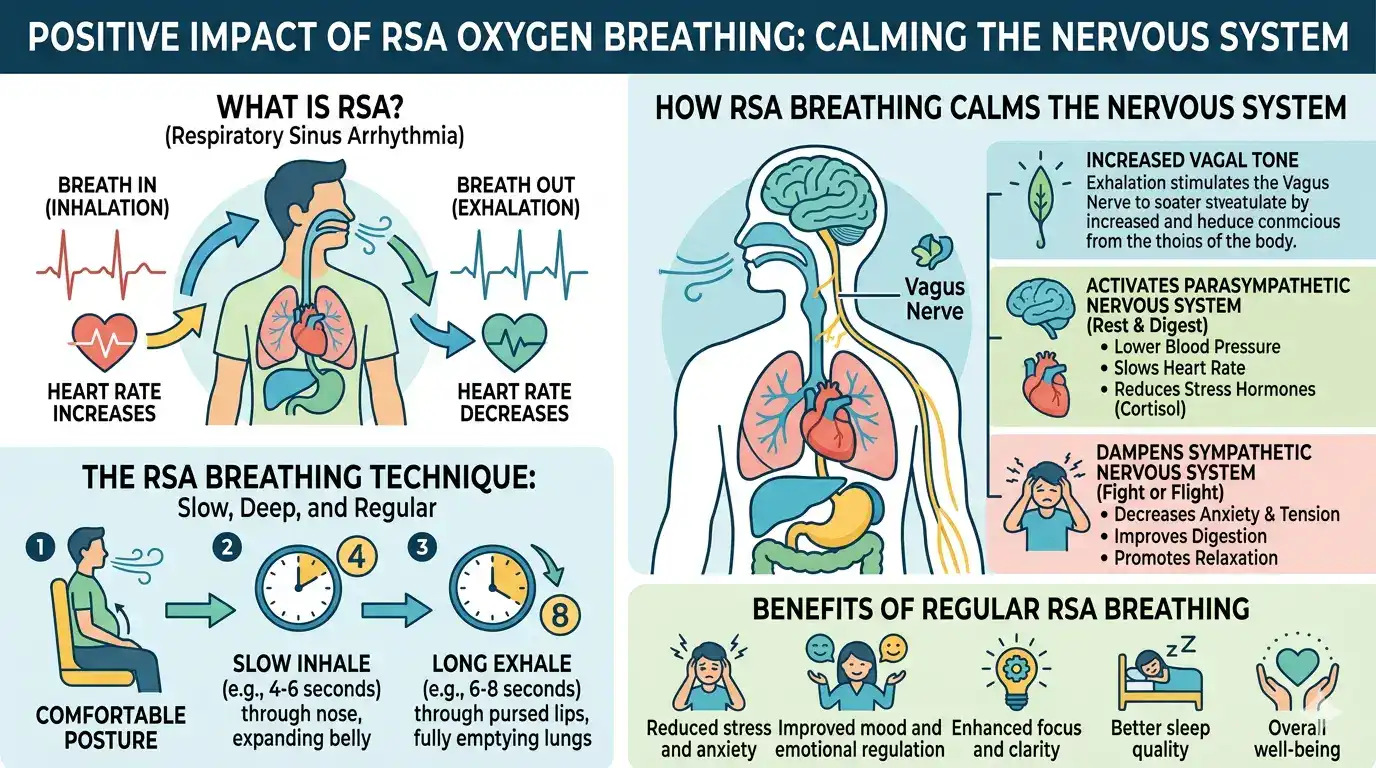
Your autonomic nervous system has two main gears. The sympathetic branch mobilises you: heart rate up, muscles ready, attention narrowed. The parasympathetic branch settles you: digestion, repair, rest, connection.
Regulation is not permanent calm. It is flexibility, being able to rise to a challenge and then come back down again afterwards. A regulated nervous system is one that recovers.
Dysregulation is when you get stuck: either revved up (anxious, irritable, restless, unable to switch off) or shut down (flat, exhausted, foggy, disconnected). Most people cycle between both.
Signs of a dysregulated nervous system
Stuck in "up":
- Racing thoughts, difficulty falling asleep
- Jaw clenching, shallow breathing, tight shoulders
- Snapping at people you love, then feeling guilty
- Constant scanning for what might go wrong
- Sound, light or touch feeling unbearable
Stuck in "down":
- Heavy limbs, needing to lie down after small tasks
- Brain fog, blank moments, losing words
- Numbness, low motivation, everything feels pointless
- Withdrawing from people, cancelling plans
Neither state is a character flaw. Both are protective responses that have simply stopped switching off.
12 techniques to regulate your nervous system
1. Extend your out-breath
The fastest lever you have. Breathe in for a count of four, out for a count of six or eight. The longer exhale nudges the vagus nerve and slows the heart. Two minutes is enough to shift most acute spikes.
2. Physiological sigh
Two short sharp inhales through the nose, then one long slow exhale through the mouth. Repeat three times. Useful when you cannot slow your breathing down any other way.
3. Orient to the room
Slowly turn your head and let your eyes land on five real things around you. This tells the brain, physically, that there is no threat here. It works better than telling yourself to calm down.
4. Cold on the face
Cold water on the cheeks, brow and around the eyes triggers the dive reflex and drops heart rate. A cold flannel works as well as a cold shower and is far more sustainable.
5. Move the fuel out
Adrenaline is designed to be used. A brisk ten-minute walk, stairs, shaking out your hands and legs, or pushing hard against a wall for twenty seconds completes the stress cycle instead of leaving it circulating.
6. Weight and pressure
A weighted blanket, a firm hug, or lying under cushions gives deep pressure input, which is calming for most people and particularly helpful for sensory-seeking nervous systems.
7. Hum, sing or gargle
All three engage the vagus nerve through the vocal folds. Humming for one minute in the car is an unglamorous but genuinely effective reset.
8. Name it to tame it
Put words to what is happening: "my chest is tight and I feel rushed". Labelling an internal state reduces its intensity, this is interoception, the sense of what is going on inside your body, and it can be trained.
9. Rhythm and repetition
Walking, rocking, drumming, kneading dough, swimming lengths. Predictable rhythm is regulating because it is predictable. Novelty excites; rhythm settles.
10. Co-regulation
Nervous systems settle in the presence of calm nervous systems. A steady voice, unhurried eye contact and slower movement from another person does more for a distressed child, or adult, than any instruction.
11. Protect the inputs
Regulation is cheaper than rescue. Lower the background noise, reduce blue light in the evening, eat and drink at regular intervals, and build in recovery time after demanding events rather than only after you crash.
12. Sleep as the foundation
Nothing on this list survives chronic sleep debt. A consistent wake time, morning daylight and a wind-down that does not involve a screen will do more over a month than any single technique.
Nervous system regulation and ADHD or autism
Neurodivergent nervous systems are often working harder in the background. Sensory input arrives louder, transitions cost more, and masking, holding yourself in a shape that suits the room, is expensive. That is why so many autistic and ADHD adults describe hitting a wall at the end of the day despite "doing nothing".
Two things follow from that.
First, strategies that assume a quiet baseline often fail. Telling an ADHD brain to sit still and meditate can increase distress rather than reduce it. Movement-based and rhythmic regulation usually works better than stillness-based regulation.
Second, the environment matters as much as the individual. Adjustments, quiet space, predictable structure, permission to move, reduced sensory load, are not indulgences. They are regulation. Our ADHD coaching in the UK work always starts here rather than with productivity systems, and funding may be available through Access to Work.
Helping a child regulate
Children borrow your nervous system before they build their own.
- Lower your voice rather than raising it
- Slow your movements before you speak
- Offer sensation before conversation: water, movement, pressure, fresh air
- Save the reflection for afterwards, when the storm has passed
- Name the state, not the behaviour: "your body has gone into panic" lands better than "stop it"
Families we work with often find that one change, a consistent five-minute regulating routine after school, reduces evening meltdowns more than any reward chart.
How long does it take to reset a nervous system?
An acute spike can settle in two to ten minutes with breath, movement or cold. A genuinely dysregulated baseline, the kind built over months of stress, poor sleep or an unsuitable environment, usually takes six to twelve weeks of small, daily practice to shift, and it shifts faster when the environment changes too.
Consistency beats intensity. Two minutes, four times a day, outperforms an hour once a week.
Frequently asked questions
How do I know if my nervous system is regulated?
You recover. Something stressful happens, you react, and within a reasonable time you return to baseline, you can sleep, eat, concentrate and be around people again. Regulation is measured by recovery, not by never being stressed.
How do I reset my nervous system quickly?
Extend your exhale, splash cold water on your face, and move for a few minutes. Together these three take under five minutes and address breathing, heart rate and circulating adrenaline.
Does a dysregulated nervous system cause anxiety?
They overlap heavily. Persistent physiological arousal makes anxious thoughts more likely and more believable, and anxious thinking keeps arousal high. Working on the body often loosens the loop faster than working on the thoughts alone.
Can you regulate your nervous system without therapy?
Yes, for everyday dysregulation, the techniques above are self-directed and safe for most people. If dysregulation follows trauma, or you feel unsafe, work with a qualified professional. If you are in crisis in the UK, contact your GP, call 111, or call Samaritans free on 116 123.
Is nervous system regulation evidence-based?
The underlying mechanisms, vagal tone, the dive reflex, exercise and sleep on stress physiology, interoception and emotion regulation, are well studied. Individual commercial protocols vary widely in quality, so favour the basics before anything expensive.
Where to go next
If you want structured support rather than a list of techniques, our nervous system and brain training work teaches regulation as a trainable skill, and our CPD-accredited training brings the same approach to schools and workplaces.
You can also book a free discovery call and talk it through with us first. No pressure, no diagnosis needed.
Tags
Newsletter
Get new notes in your inbox.
Short, practical writing on brain training, coaching, and calmer work. No spam. Unsubscribe any time.
By subscribing you agree to our Privacy Policy.