


September 19, 2026
How Schools and Organisations Fund Sensory Rooms and Peace PODs
Which budgets and grants can pay for a sensory room, calming room or Peace POD, how to apply, and how to write a bid that a business manager or grant panel can say yes to.
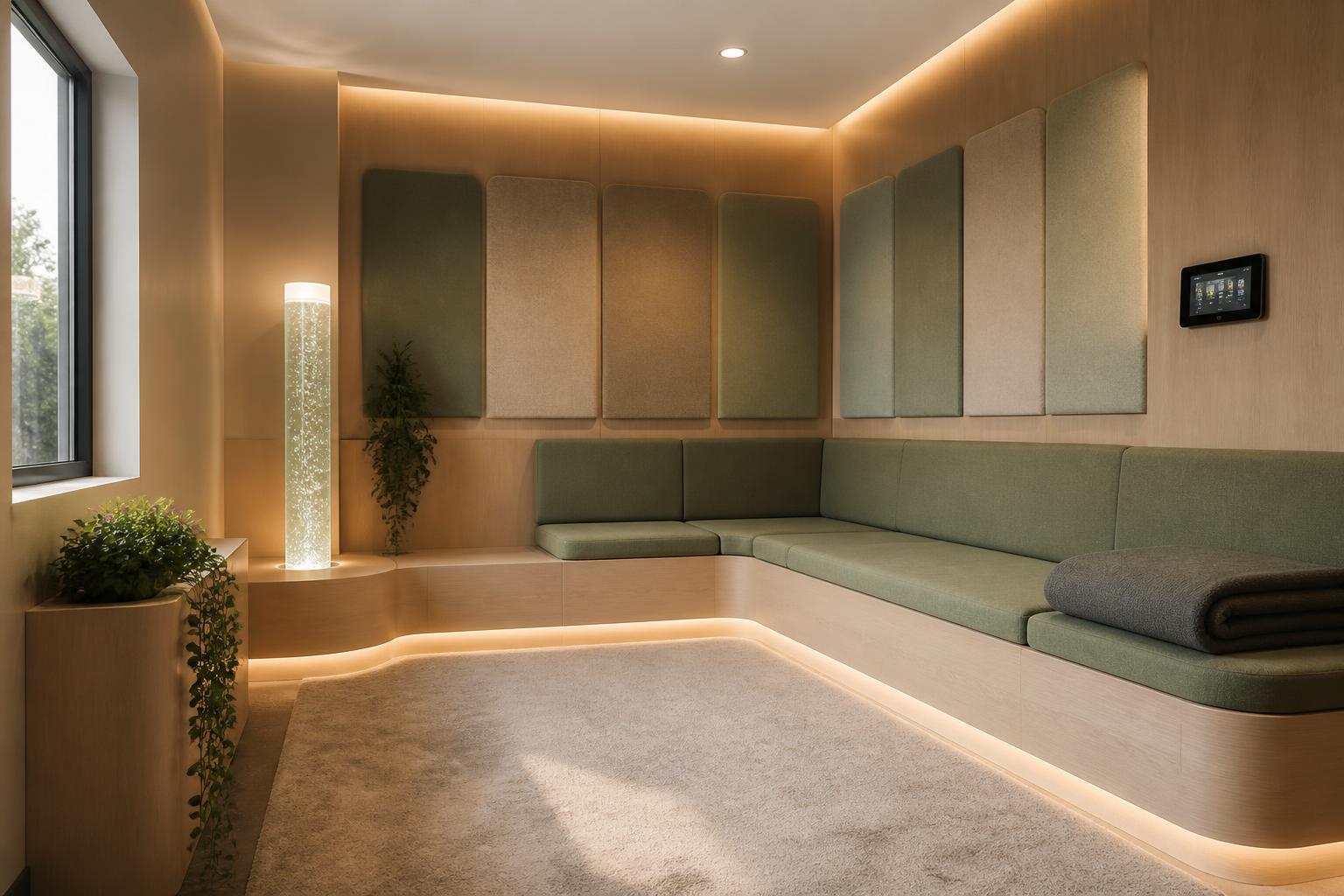
Most schools and community organisations do not have a line in the budget called "sensory room". The money is nearly always there, it just sits in several smaller pots with different rules, different decision makers and different deadlines. This guide sets out the routes we see used in practice, what each one realistically covers, and how to put together an application that a business manager, trustee or grant panel can say yes to.
Nothing here is a promise of funding. Every route below is a route to pursue, with the honest caveats attached.
Step 1: Decide what you are actually funding
Before you look at a single funder, write down three things. Every route below asks for them, and most applications fail because they are missing.
- The need, with numbers. How many pupils or people, what is happening now, and what it currently costs you. For a school that might be recorded incidents, lesson minutes lost, full classroom exits, suspensions or attendance for named children. For a community organisation it might be waiting lists or referrals you cannot meet.
- The thing you are buying. A calming or SEND room fit out, an indoor Peace POD, a garden sensory room, staff training, or a mix. Capital (a physical room or POD) and revenue (training, sessions, staffing) often come from different pots, so separate them on the page.
- The outcome you will report. Two or three measures you will collect before and after. Funders fund change, not equipment.
Step 2: Budgets a school or organisation can use directly
These are the fastest routes, because the decision is usually made inside your own organisation.
SEN notional budget
Every mainstream school holds a notional SEN budget intended to meet additional needs up to a threshold per pupil. Regulation space and staff training sit comfortably within its purpose. Caveat: it is notional, not ring-fenced, and is often already committed to staffing. Ask your business manager early what is uncommitted this year.
High needs top-up funding
Where a pupil has an EHCP, top-up funding from the local authority follows the provision named in the plan. If regulation support and a low-arousal space are named in Section F, the cost has a home. Caveat: it must be provision for named pupils, not a general facility. Annual review is your natural moment to get the wording right.
Pupil premium
Can fund interventions and staff development that raise attainment and attendance for disadvantaged pupils. Regulation work links directly to attendance and lost learning time. Caveat: you must be able to show the link to outcomes in your published pupil premium strategy.
Devolved formula capital (DFC)
Small annual capital allocation schools can save across up to three years. This is the most commonly used route for a physical room or POD. Caveat: capital only, it will not pay for training or sessions. Pooling two or three years is normal and usually needs to be planned with your business manager now, not in July.
Trust and diocese capital
Multi-academy trusts hold central capital and often run an internal bid round. A small, costed proposal with a clear pupil benefit competes well against routine maintenance. Caveat: deadlines are internal and often early in the financial year.
Local authority early help and public health
Some authorities and integrated care boards commission preventative wellbeing work, particularly where it reduces escalation to specialist services. Caveat: availability varies enormously by area. Ask your early help coordinator what is currently commissioned.
Access to Work (for adults)
For employed adults, Access to Work can fund coaching and workplace adjustments, including a quiet regulation space where it is a reasonable adjustment. Caveat: it is granted per person, for work-related need, not for a shared facility.
Step 3: Grant routes a community organisation or CIC can pursue
A Community Interest Company sits between a private company and a charity. It can trade, and because it has a community purpose and an asset lock, it is also eligible for a large share of grant funding. Many funders welcome CIC applicants; a minority fund registered charities only, and a few want two years of accounts.
Routes worth exploring:
- National lottery community funding. Community-led projects, with smaller awards for local work and larger, longer awards for established delivery. Strong fit where a project is clearly led by and for local people.
- Community foundations. Each county, including Essex, has a foundation that distributes many small local funds through one application. Often the most realistic first grant.
- Independent grant-making trusts. Many fund children, young people, disability, mental health or community wellbeing. Read the last list of grants awarded before applying, fit matters more than eloquence.
- Children and young people funders. Several national funders focus specifically on disabled children, young carers and families under pressure.
- Health and wellbeing funds. Physical activity, mental health and prevention funds sometimes cover regulation and wellbeing work delivered in community settings.
- Corporate social value and sponsorship. Companies bidding for public contracts must evidence social value. Sponsoring a calming room or POD in a local school is measurable, local and reportable, which is exactly what their own tenders need.
Honest caveats: grant timelines are long (three to nine months is normal), most funders will not fund something already bought, and almost none will fund your core overheads alone. Plan your project around the funding round, not the other way round.
Step 4: Apply jointly, school plus community organisation
Joint applications are often stronger than either party alone, because the school brings the need, the pupils and the premises, and the community organisation brings delivery capacity and community reach.
A workable sequence:
- Agree the shared outcome in one paragraph, in plain English.
- Decide who holds the money and who delivers what. Put it in a short partnership agreement or memorandum of understanding.
- Split the budget into capital (room or POD) and revenue (training, sessions, evaluation).
- Add match funding, even if it is small or in kind. Staff time, the room itself and existing equipment all count and materially improve most applications.
- Name your evaluation method before you apply, and collect the baseline first.
Step 5: Write the bid
Panels read quickly. Give them a structure they recognise.
- Need: two or three real numbers from your own setting, not national statistics.
- What you will do: the room, the POD, the training, the sessions. Concrete and costed.
- Who benefits: how many people, how they were identified, and how they were involved in the design.
- Outcomes and measures: the before-and-after numbers you will report, and when.
- Value for money: three quotations where required, and the cost per beneficiary.
- Sustainability: what happens after the grant. A physical room lasts years, which is a strong answer.
- Safeguarding and governance: policies, insurance, DBS, data protection. Have these ready to attach.
Step 6: Bid for a Peace POD or calming room specifically
If we are the supplier you want to name, you can request a formal quotation, a written specification and a social value statement to attach to your application, and we will set out the lead times in writing. Calming room fit outs run to one to two weeks on site; Peace POD installation runs to one to three weeks.
Where procurement rules apply, you can usually direct award below your threshold, request three quotations, or buy through a framework. The commission us page sets out each route and the due diligence we can evidence, and the funding routes page lists the same funding pots as a reference table.
A realistic timeline
- Weeks 1 to 2: agree the need, collect your baseline numbers, get a quotation.
- Weeks 2 to 4: confirm internal budget routes with your business manager or finance lead.
- Months 1 to 3: submit grant applications that fit, in order of realistic odds.
- Months 3 to 9: decisions arrive. Start with the internally funded element so the work begins either way.
The organisations that succeed are rarely the ones with the best prose. They are the ones who knew their numbers, asked for something specific, and could evidence what changed afterwards.
Funding questions we are asked most
- Can a Community Interest Company apply for grant funding?
- Yes. A CIC has a community purpose and an asset lock, and most community funders accept CIC applicants, including lottery community funds and county community foundations. A minority of trusts fund registered charities only, and some ask for one or two years of filed accounts, so check each funder's eligibility criteria before applying.
- Which school budget can pay for a sensory room or calming room?
- Devolved formula capital is the most common route for the physical room or POD, often saved across two or three years. The SEN notional budget, high needs top-up funding for named pupils with EHCPs, and pupil premium are used for training, staffing and interventions. Capital and revenue usually come from different pots, so cost them separately.
- How much does a school calming room or SEND room cost?
- A calming or SEND room fit out typically runs from around £2,000 to £8,000 depending on the room, the acoustic work and the equipment. An indoor Peace POD starts from £4,759 and a garden sensory room from £5,209. Ask for a written specification and quotation you can attach to a funding application.
- How long does grant funding take to come through?
- Three to nine months is normal from application to decision, and most funders will not retrospectively fund something already purchased. Start the internally funded part of the project first so the work is not held up by a single decision.
- Can a school and a community organisation apply together?
- Yes, and joint applications are often stronger. The school brings the identified need, the pupils and the premises; the community organisation brings delivery capacity and community reach. Agree in writing who holds the money, who delivers what, and how outcomes will be measured before you apply.
- Does match funding have to be cash?
- No. In-kind contributions such as staff time, use of the room, existing equipment and volunteer hours are usually accepted and count towards match funding. State them clearly and value them honestly.
Tags
Newsletter
Get new notes in your inbox.
Short, practical writing on brain training, coaching, and calmer work. No spam. Unsubscribe any time.
By subscribing you agree to our Privacy Policy.